

Cultivating inner availability: Q&A with a Christian mental health specialist
How our mental health aligns with spiritual formation and practical tips in caring for it

Welcome back to Faith & Health!
This week, we have Professional Counselor K. Lee Brown as a guest writer (see full credentials and work under his author bio at the end of this article).
I found K Lee’s publication here on Substack and appreciate his approach to healing and wholeness. Though he works under the umbrella of mental health, he has a deep understanding of bodily contributions and a continued underlying focus on spiritual formation.
In a way, his writings mirror my own, as I have a background in physical therapy but recognize the complex role that our minds, emotions, and relationships play in our well-being. We also both humbly attempt to root our work and lives in God’s truth and purposes.
I was thrilled when I reached out, and he agreed to collaborate and share his expertise. He has been a pleasure to work with, and I hope you enjoy his thoughtful answers to the following questions:

Q&A with K. Lee Brown
Why should Christians seek mental health care? Isn’t God the ultimate healer–aren’t prayer and reading the bible enough?
This is such a wonderful question. It comes from such a pure place to love and depend on the Lord. I do, however, believe there’s a tiny category error buried in the question that’s worth highlighting. It assumes that God’s work (what only He can do) and human medicine and scientific efforts are in competition, when the history of Christian thought has never really seen it that way. Augustine wrote that all truth belongs to God, and that applies to what a neurologist may discover about the brain just as much as what a theologian discovers in Scripture.
God is the healer, yes. But He most often heals by partnering with and working within His creation. When Elijah collapsed in exhaustion and despair under the juniper tree, He sent an angel who told him to eat and sleep, which shows that bodily practices matter. Then came the still, small voice. I think the sequence here is intentional and instructs us that our spirit is only as useful as the body (its vessel) is healthy.
Science, at its best, is humanity learning to understand how God made things to work. When we understand how trauma reshapes the nervous system, or how depression distorts perception, we’re not straying from God’s truth; we’re stewarding it. And when a Christian sits with a skilled counselor, working honestly through grief or shame or anxiety, that work can be as much a means of grace as any prayer.
In what ways does caring for our mental health support our spiritual formation as Christians?
Jesus quoted Deuteronomy when he named the greatest commandment: love God with all your heart, soul, mind, and strength. This means the mind is not incidental to worship, but a primary instrument we are commanded to intentionally use.
There is, however, a practical reality beneath the theology. A mind burdened by unresolved trauma, chronic anxiety, or corrosive shame is a mind that struggles to receive much of anything clearly. This reality, in my opinion, is not a failure in our faith but rather it’s a feature of how we’re made. When the interior life is in disorder, the noise tends to drown out what work the Spirit may be trying to do in us. Spiritual formation requires a degree of inner availability, and mental health care is, among other things, the work of cultivating that availability.
Dallas Willard used to press on the idea that spiritual formation isn’t merely about our intentions—it’s about the actual condition of the self that God is working with. We bring our whole selves to God, which means the health or disorder of our minds is directly relevant to how we grow.
Stewardship, in this sense, extends inward. To tend to one’s mental and emotional life is to take seriously the instrument(s) through which we think, discern, love, and obey. A person growing in psychological honesty, for example, when learning to name what they actually feel and how to see themselves without constant distortion, is a person becoming more capable of genuine worship, not less. This kind of attention to care is, in the truest sense, an act of devotion and worship.
What, if any, areas of physical health do you see overlapping with, or affecting, mental health?
I subscribe to the holistic belief that we are not isolated faculties but a relation of faculties. This essentially means that our bodies influence our minds and emotions, and vice versa. For instance, there are cases where I may be working with someone who has OCD, and research has shown, and my personal experience has shown that clients experience more success when we pair nutrition and physical changes with our cognitive and behavioral therapies.
It’s funny, the ancient Hebrews, thus the Bible, didn’t have a word for the living body that excluded the soul, or a word for the soul that excluded the body. Some may be tempted to blame these ideas on ‘primitive thinking’, but I feel it may actually be more accurate than the sharp Cartesian split we inherited, which taught the West to treat the mind and body as essentially separate tenants sharing a building.
The body, mind, heart, and all the other faculties are far more integrated than that.
In clinical work, this becomes visible quickly. I’ve sat with clients navigating OCD whose progress seemed to hit a wall until we began paying attention to sleep, nutrition, and movement alongside the cognitive and behavioral work. The research is increasingly supporting holistic ideas, things such as inflammation’s effect on the mood, that gut health influences neurotransmitter production, and that chronic sleep deprivation impairs the very executive functioning we’re trying to strengthen in therapy.
What I’ve come to believe, both professionally and personally, is that caring for the body is rarely separable from caring for the mind or any other faculty. When someone begins exercising consistently, eating with some intention, and sleeping adequately, they often report that their interior life becomes more ordered as well.
What would you look for in secular mental health care that aligns with Christian values if someone is seeking treatment in that realm?
I will answer for me personally. What I’m looking for is someone who is clinically rigorous, scientifically curious, and genuinely conversant with Christian spiritual formation, not just Christian doctrine. The reason is not just because this intersection is where I specialize and train others to operate, but because if we take the holistic view seriously, the spiritual dimension of a person isn’t something to be bracketed, and I want someone who is well-versed and practiced in forming the human spirit.
Sometimes, someone well-versed in spiritual formation, especially from the Christian lens, is tough to find. In that case, I, being a Christian, would look for a Christian counselor because the shared worldview helps tremendously. Personally, I’d try my best to ensure the counselor is a Bible-believing and practicing Christian because in today’s world, the label “Christian” can mean a lot of different things. What I’m interested in is someone for whom following Jesus’ way of life is a living reality, not a marketing category.
And then there is the issue of competency in specific areas of need. Graduate training is necessarily broad, which means that depth and specialization have to be pursued independently after graduation. Consider looking for someone who has done extra study in the gold standard modalities of care for the area(s) you wish to be helped. For example, someone presenting with OCD might want to consider a clinician trained in or studying something like Exposure and Response Prevention. Trauma work may call for someone with training in modalities such as EMDR, A.R.T, or another trauma-focused modality, versus just talk therapy.
If someone does not have access to Christian mental health care, are there any independent resources you could direct them to?
There are numerous good resources scattered across books, apps, and communities, and I’m happy to point people toward them if anyone would like to reach out to me. In general, however, when someone asks me this question, the first thing I reach for isn’t a resource to consume, such as a video, podcast, or book. I reach for a pen and a sheet of paper.
I say half-jokingly that if people genuinely understood what honest, sustained writing does to the interior life, a good journal would put me out of business. There’s real neuroscience behind it, too. The act of translating experience into language engages the prefrontal cortex in ways that help regulate the emotional brain. But honestly, the research just confirms what reflective people have known for centuries. The Psalms, Ecclesiastes, and Lamentations are, in many ways, a journal. In them, we can see lament, stress, gratitude, and wonder poured out vulnerably and in detail.
What I’ve found personally, and what I return to whenever the weight of life accumulates, is that writing everything out, especially in great specificity and detail, without editing, and without tidying anything up, produces a release that is physical as much as emotional and mental. And when I close my writing with a written prayer, or simply a statement of surrender, it’s even more impactful. There’s a positioning of the human spirit that happens in that act, a reorientation toward dependence that no amount of internal ruminating quite achieves.
It costs nothing, it requires no appointment, and it has the particular virtue of forcing honesty, which is, most of the time, exactly where healing begins. It’s in these moments I most encounter the Spirit as the great comforter and counselor.
Guest author bio
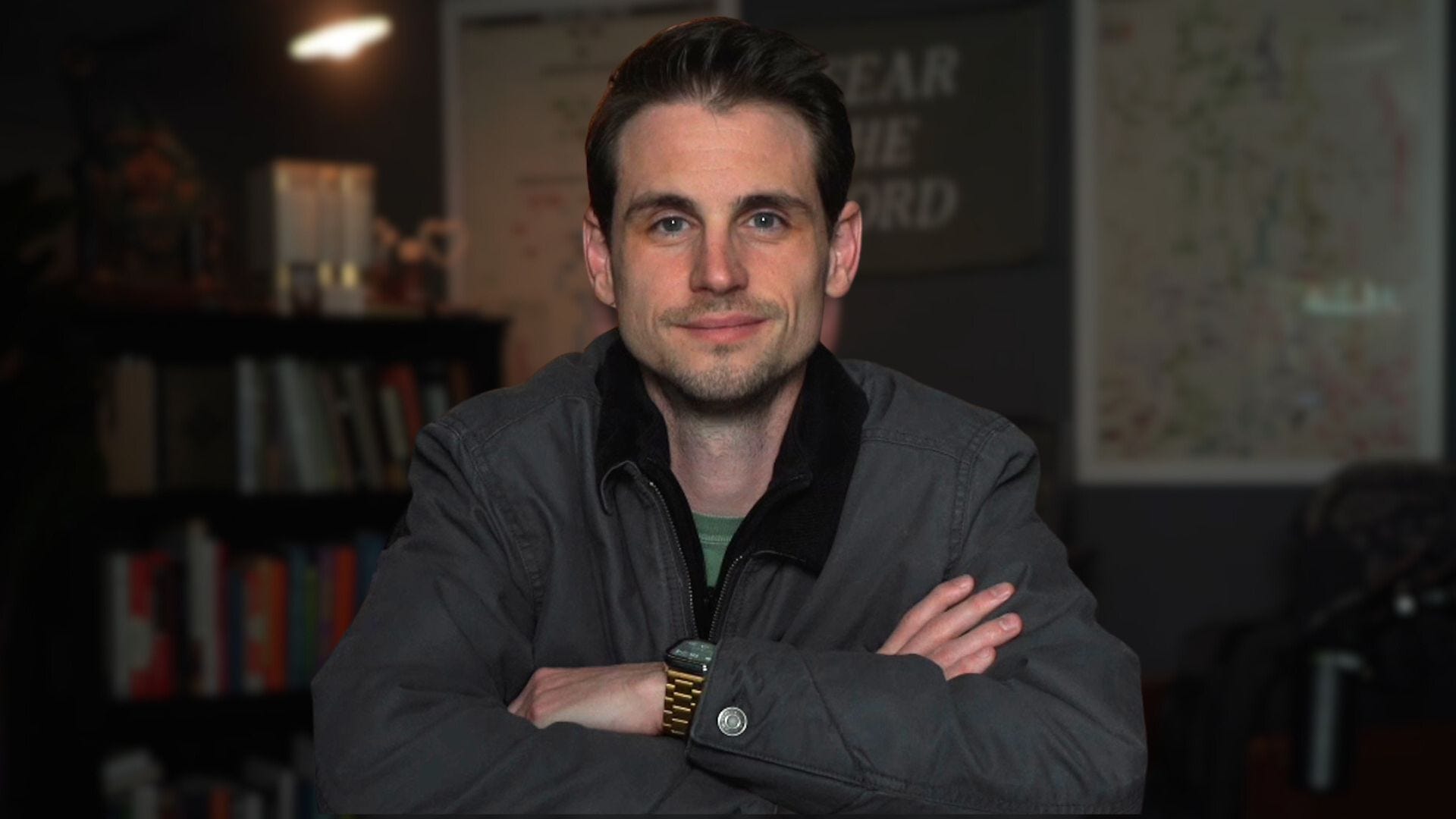
K. Lee Brown is a Biblical Expositor, Professional Counselor, and the Founder and Executive Director of Whole Soul Counsel. He strives to help others experience wholeness in mind, emotions, relationships, and spirit.
Lee’s specialized work in the nervous system, OCD and anxiety disorders, Complex Trauma, Marriage and Family Systems, and his model of counseling called Formation-Centered Counseling has opened doors to minister to a wide range of people around the world.
He is deeply passionate about equipping men to lead their homes and communities with godly character, seeing marriages and families flourish, and guiding others through healing from anxiety, trauma, and grief.
Additionally, Lee has specialized in serving pastors, high-level leaders, and those in high-visibility positions.
Lee’s new book, “The Invitation” covers an abundance of foundational truths that are sure to be life-transforming as he invites us into a life-changing journey of discovering our Kingdom identity and purpose.
Find Lee at:
Please leave your thoughts and comments below. Did anything stand out to you from this Q&A? Do you have any follow-up questions for K. Lee Brown?
Thank you, Danielle, for having me be part of this article. Thank you for all the incredible work you do to help people live in healing and wholeness! So thankful for you.
My spirituality soothes my wounded psyche and leaves me with peace. At times still wounded and hurting, but at peace.